Email
WhatsApp

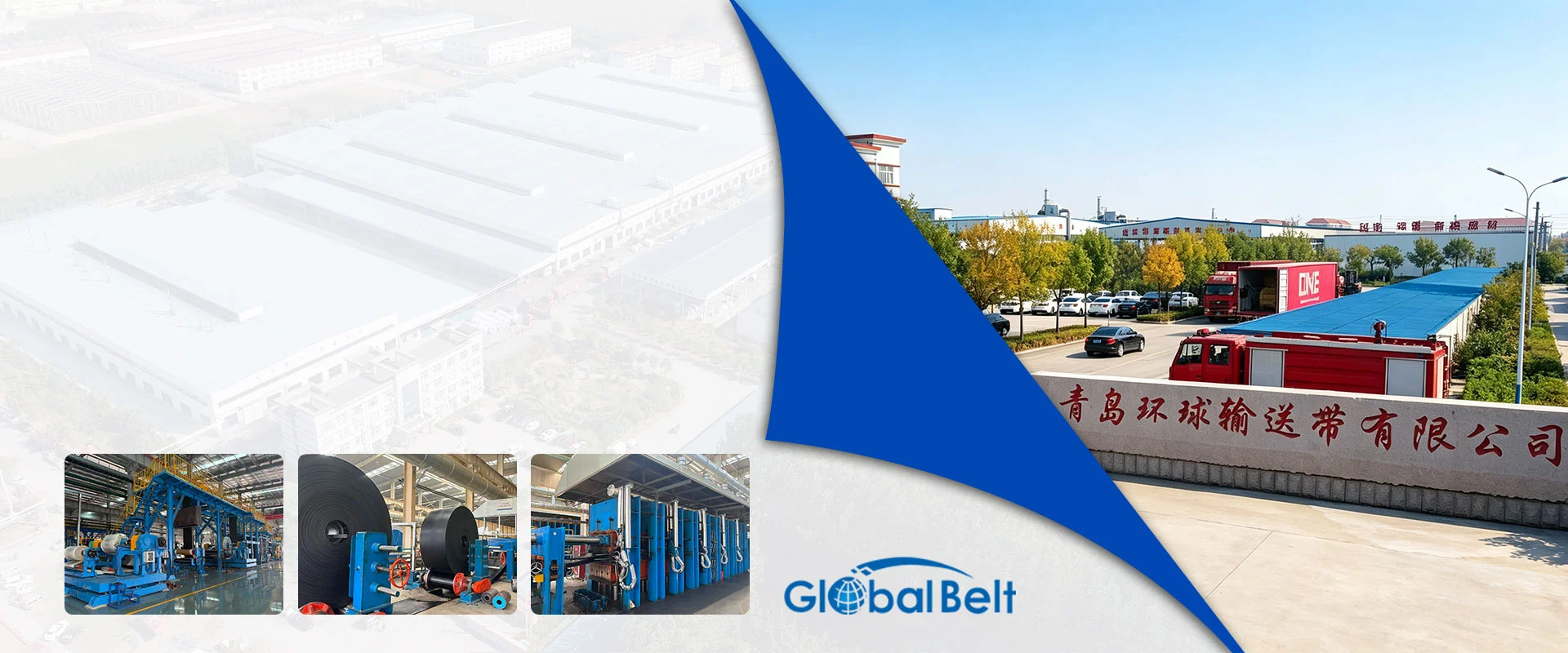
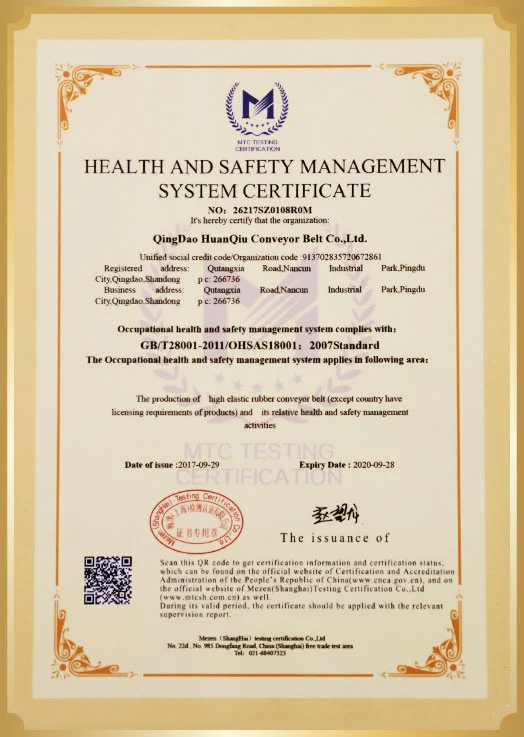
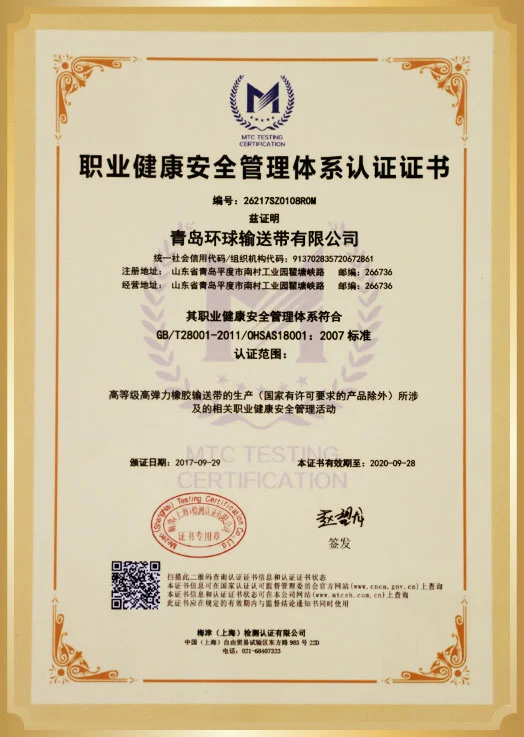
ISO-Certified Manufacturer Serving Mining,
Cement, Ports & Power Plants in 50+ Countries
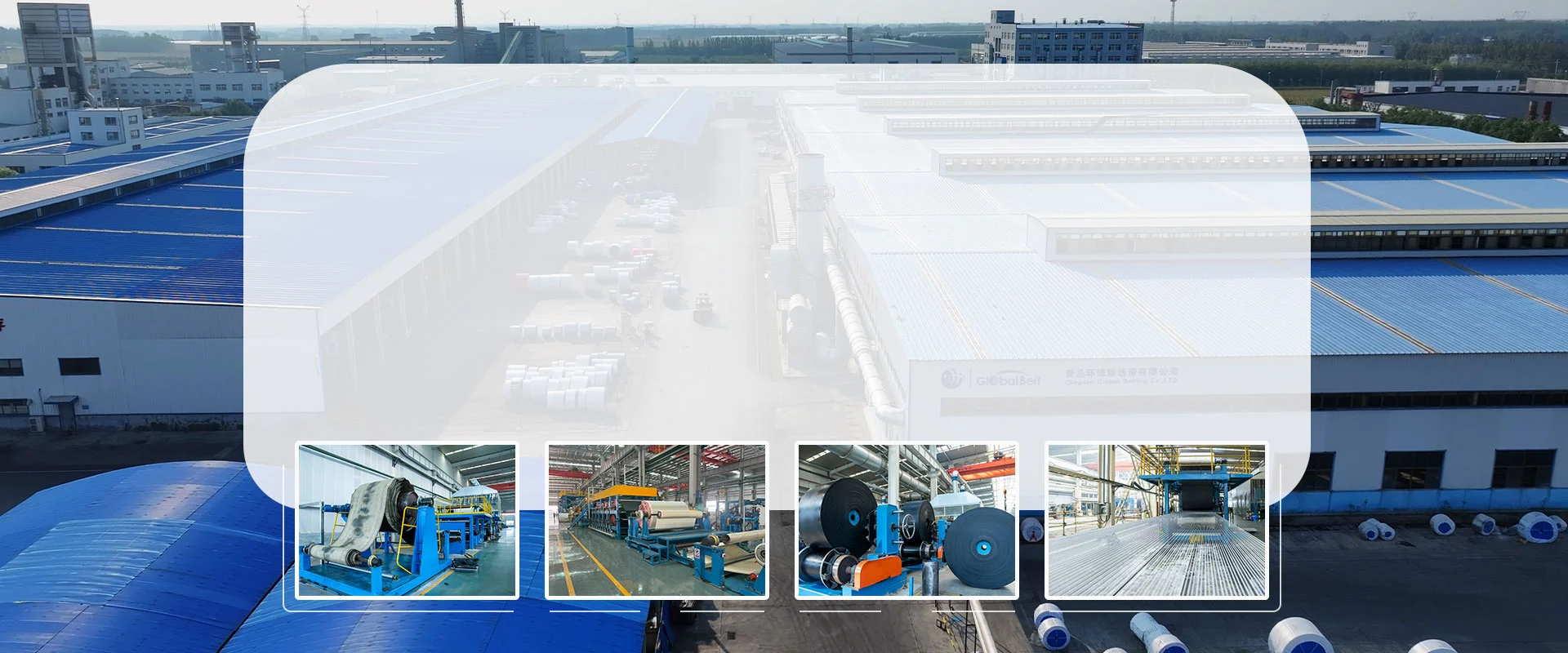
24 Workshops · 100+ Production Lines · 21 Million m² Annual Capacity
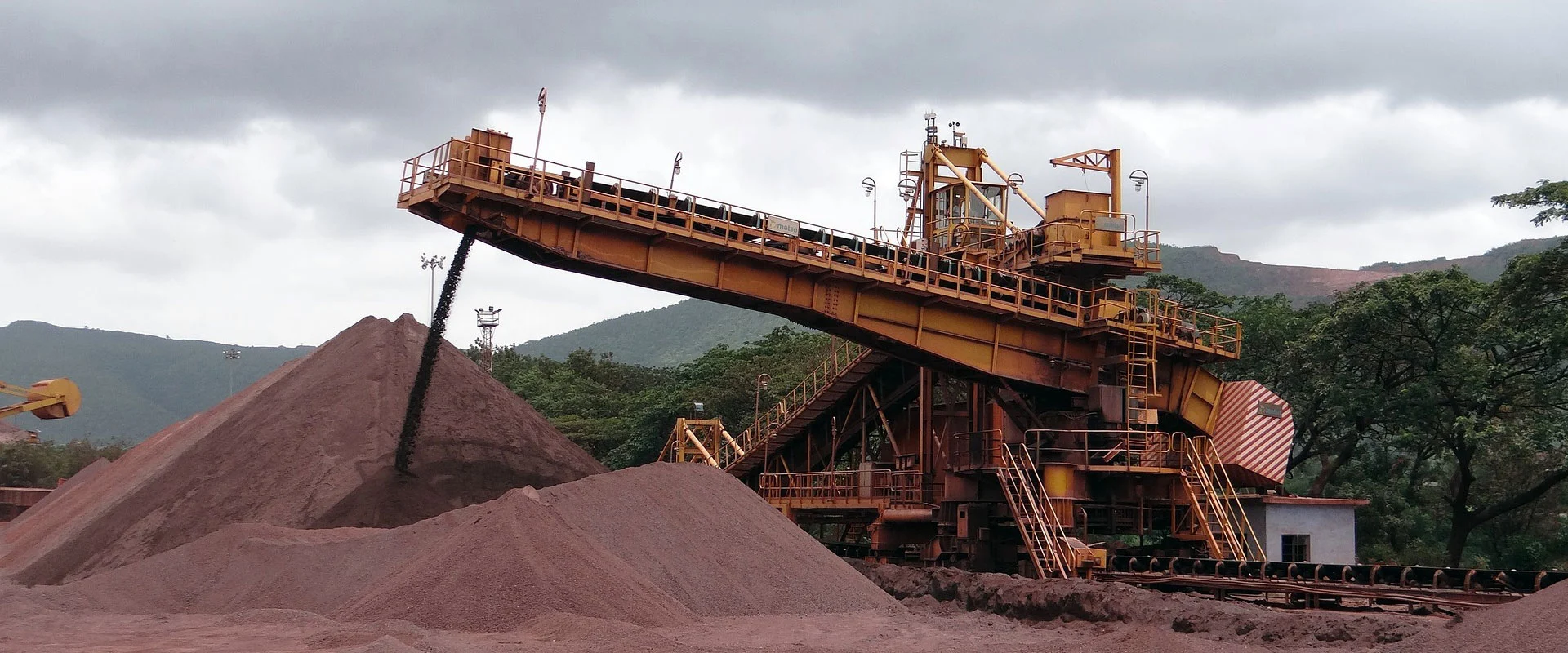
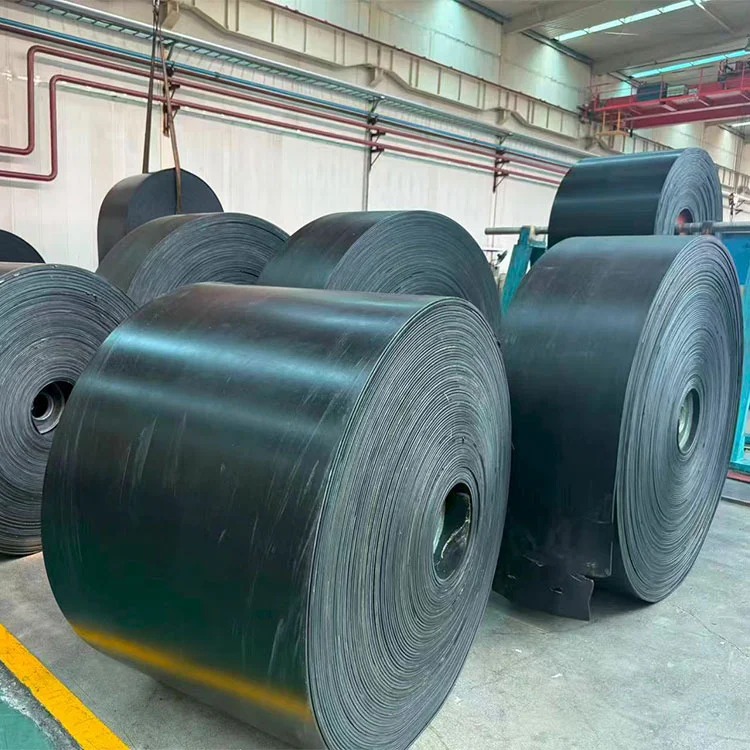
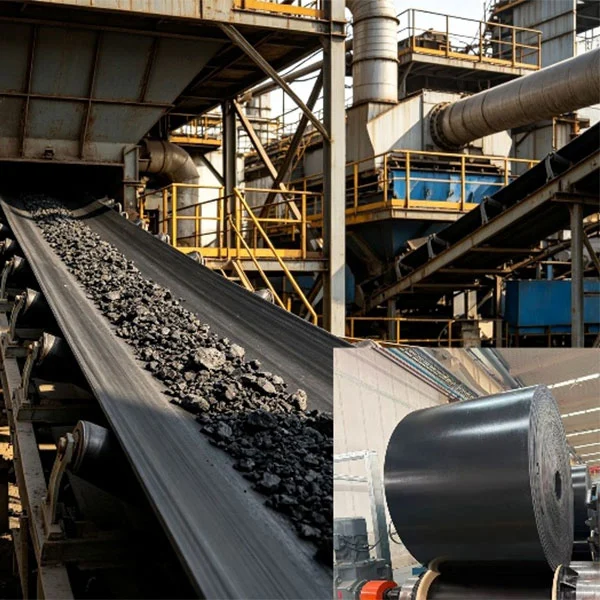
Custom heat-resistant & abrasion-resistant belts for mining, cement, ports & power plants – solve clinker scorching & ore tearing issues.
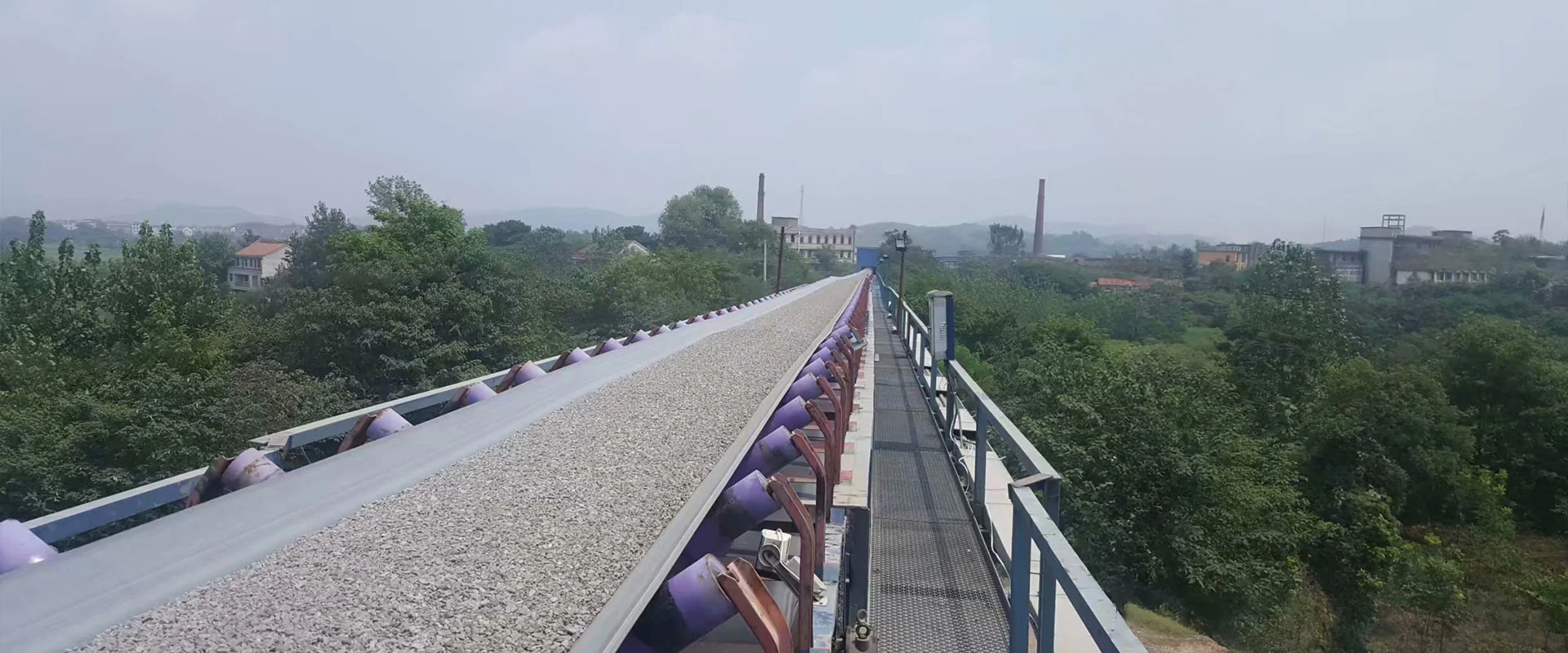
Get a quick comparison guide and expert advice tailored to your material density, temperature, and angle.
Two factories (China & Thailand) ensure fast 25-30 days lead time. OEM/ODM with full certification.
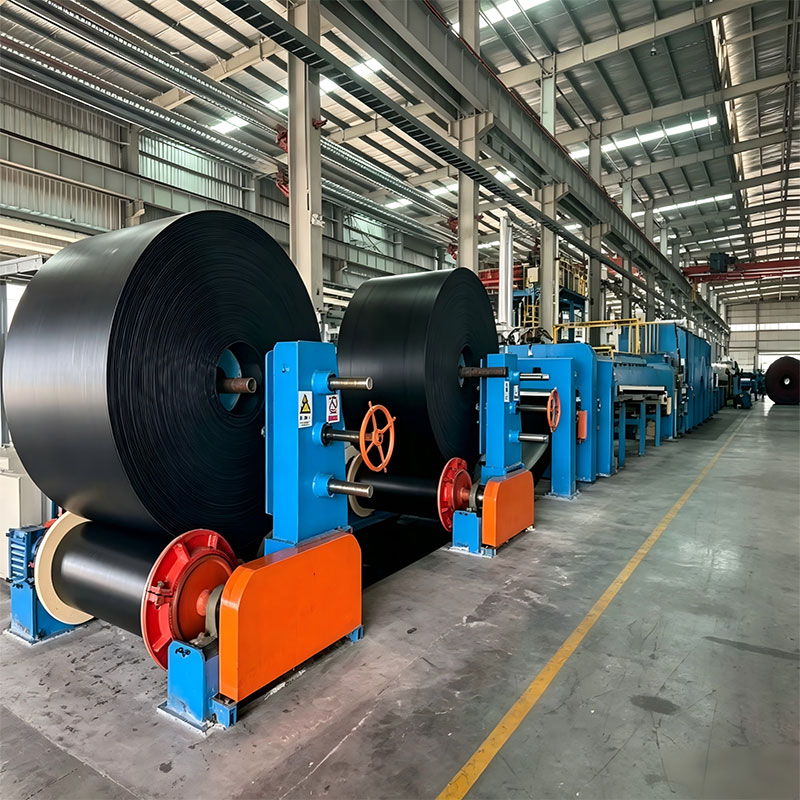
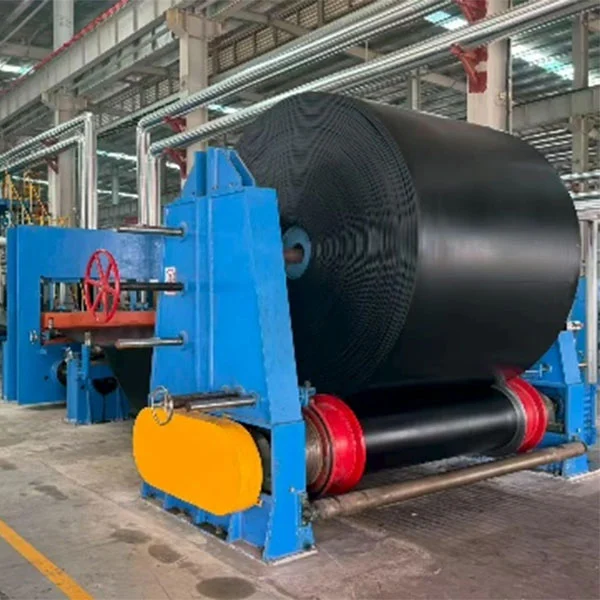
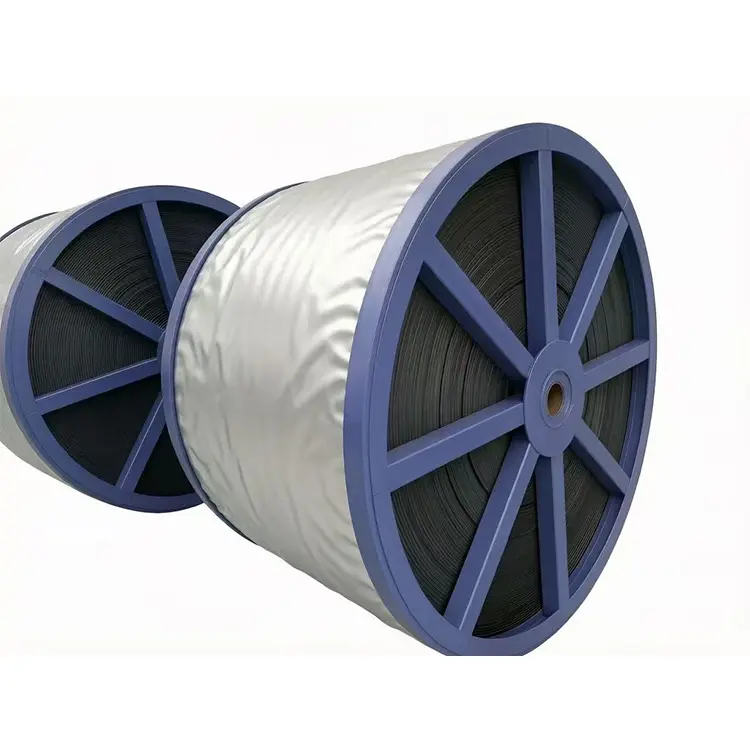
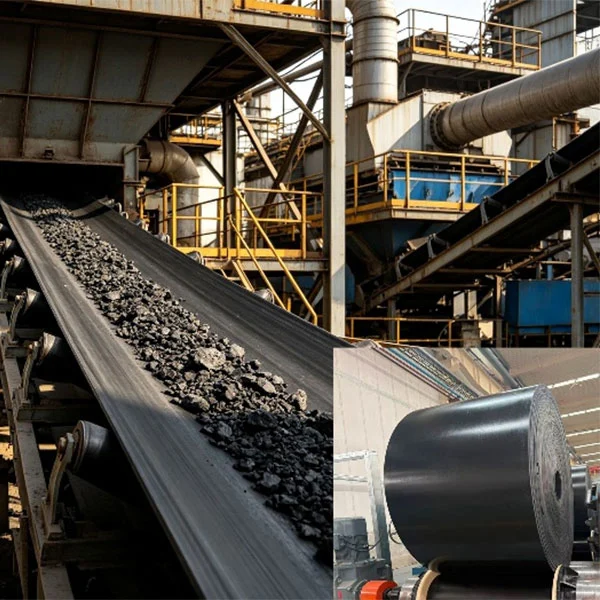
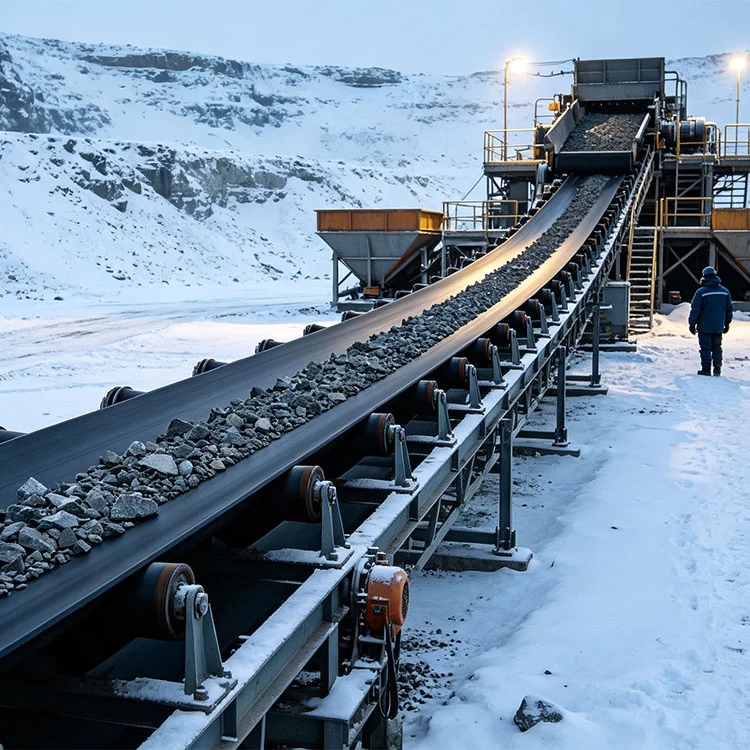
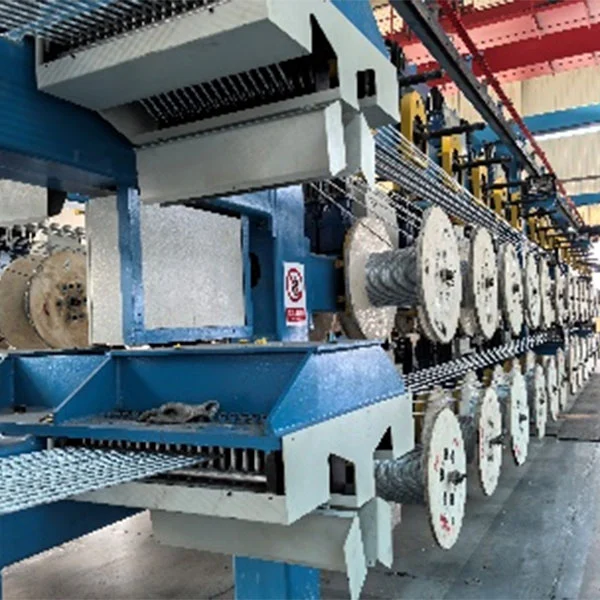
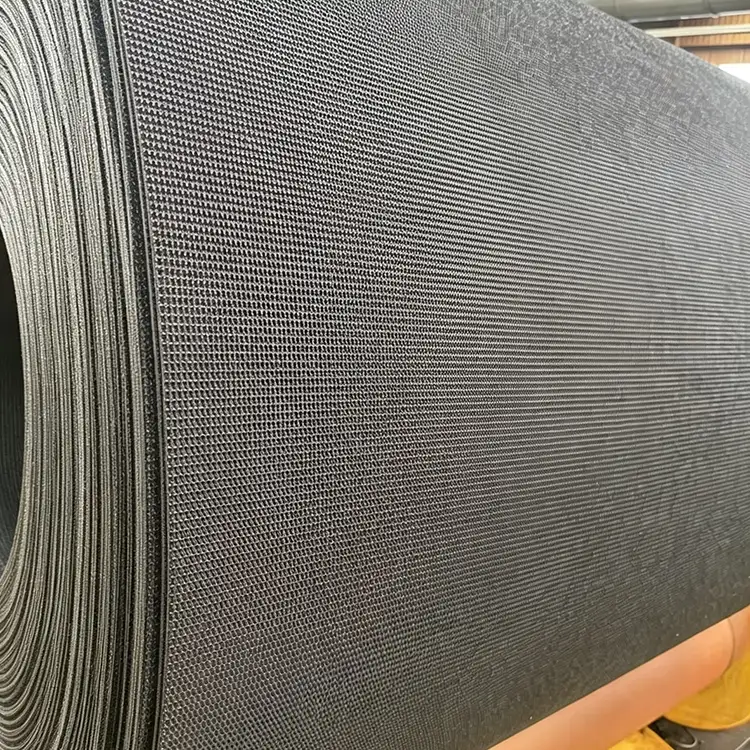
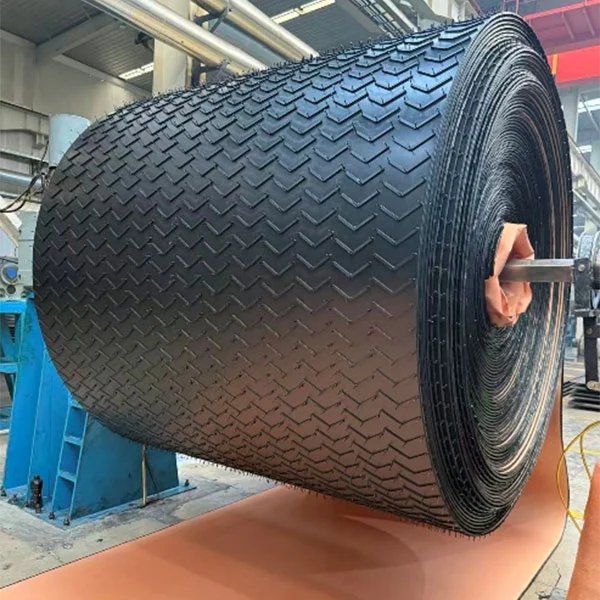
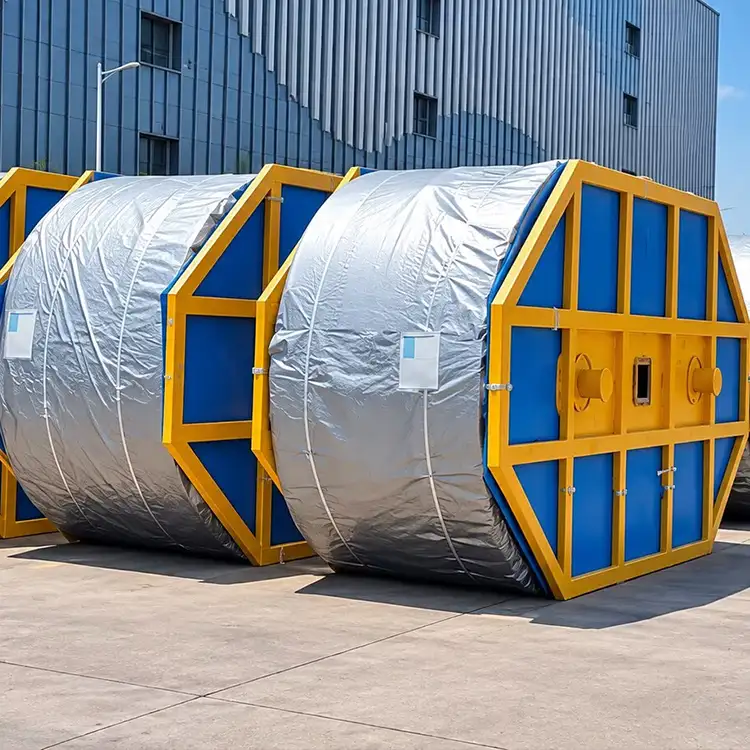
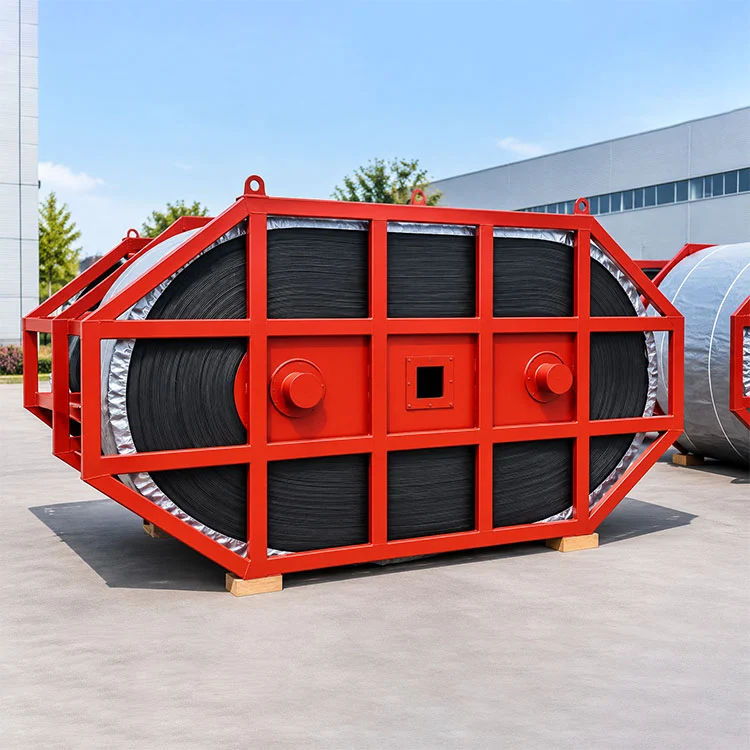
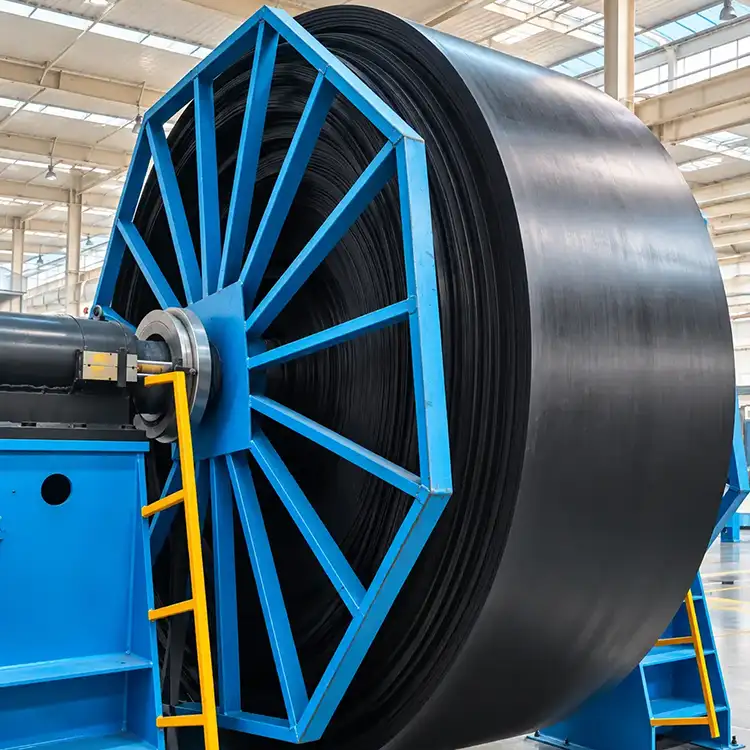
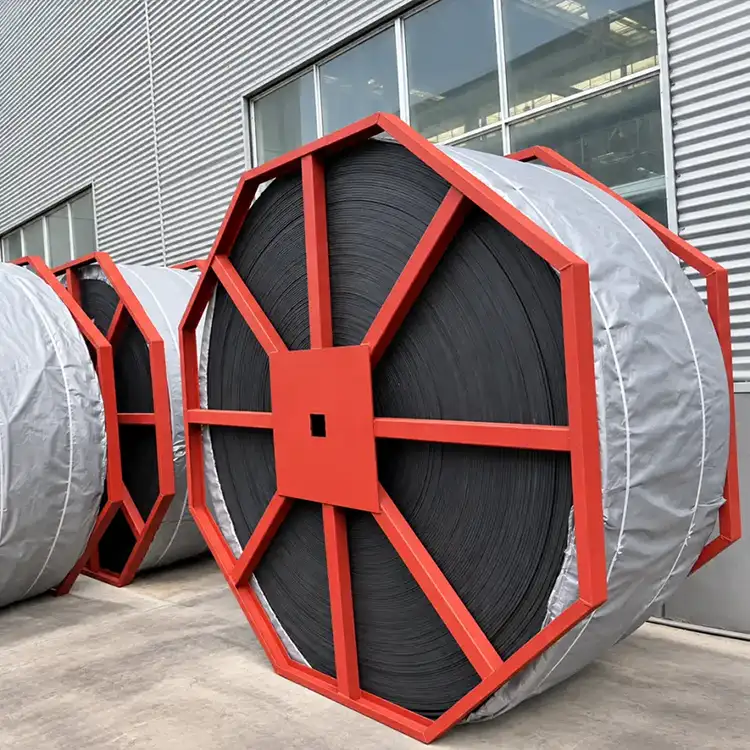
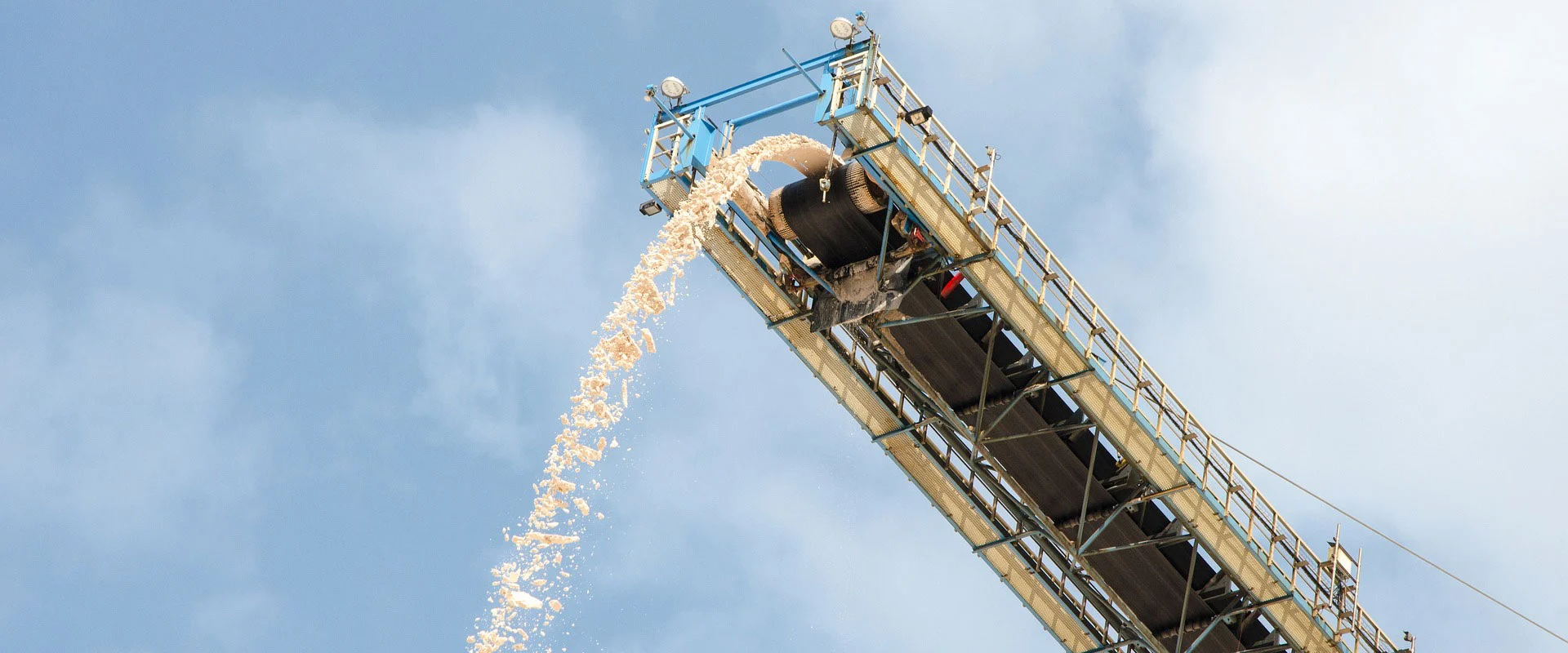
Heat-resistant & wear-resistant customization for high-temperature bagasse conveying.
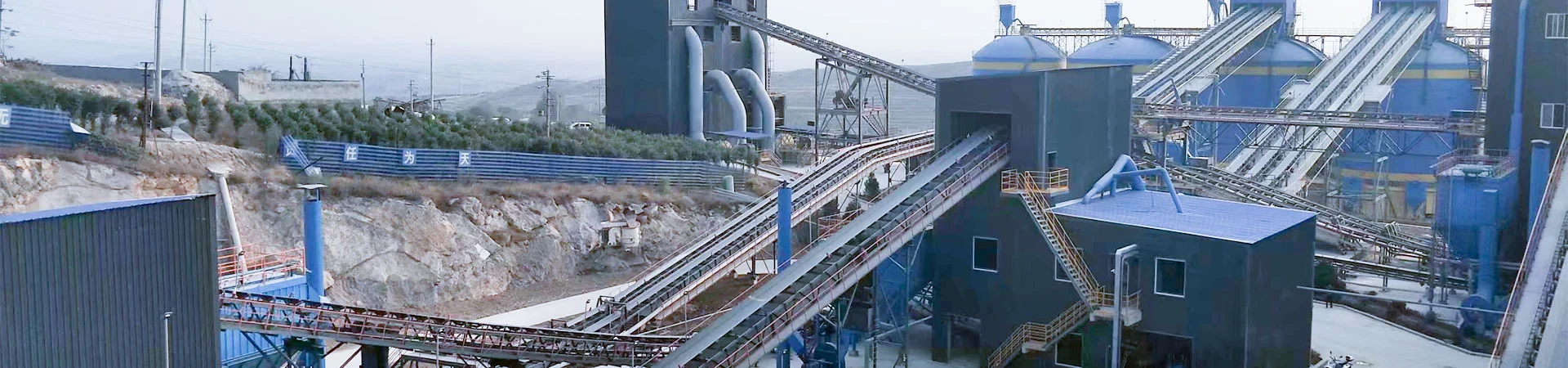
High-temp EP300 belts for clinker conveying at 180°C continuous operation.
Cleated chevron belts for rainy-season operation with 35° incline handling.
Localized supply with rapid on-site technical support and spare parts.
| Parameter | Textile Conveyor Belt (EP / NN) | Steel Cord Belt |
|---|---|---|
| Tensile Strength | High, typically up to 3000 kN/m | Very high, up to 5400 kN/m |
| Elongation at 10% Load | Low to moderate; EP: ~1.5–2%, NN: ~3–4% | Extremely low, ~0.2% |
| Impact Resistance | Excellent to very high | Superior |
| Moisture Resistance | Excellent for EP; NN strength may decrease when wet | Excellent |
| Flexibility / Troughability | Good to excellent; NN is suitable for smaller pulleys | Fair; requires larger pulley diameters |
| Best Applications | Mining, cement, aggregate, bulk material handling, and general heavy-duty conveying | Extra-long-distance, high-tension, and underground coal conveying |
| Typical Cover Options | Heat, oil, cold, abrasion, and fire resistant | High abrasion and flame-retardant options |
| Cost Efficiency | More economical initial investment; suitable for a wide range of conveying systems | Higher initial cost, but longer service life in demanding applications |
| Core Advantage | Flexible, versatile, and cost-effective | High strength, low elongation, and long-distance conveying capability |
💡 Still unsure? Chat with our engineers for a free recommendation →
For cement clinker with surface temperatures ranging from 150°C to 200°C, we strongly recommend our Heat-Resistant (HR) EP Conveyor Belts. These belts utilize specialized EPDM/IIR rubber compounds that maintain excellent elasticity and adhesion under prolonged thermal exposure. For extreme peak temperatures, we can also apply an optional heat-resistant skim coat to prevent cover hardening and cracking. Our HR belts are widely used in large-scale cement projects across the Middle East and comply with DIN/ISO testing standards.
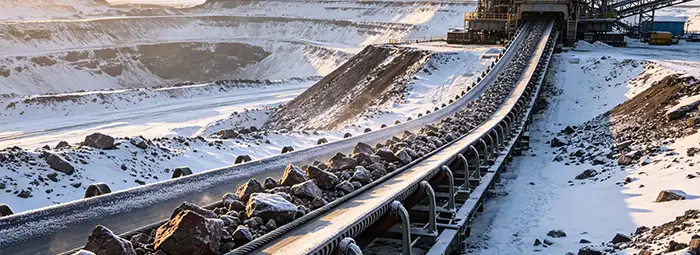
To prevent longitudinal tearing and impact damage in mining applications, we offer two proven solutions:
Additionally, we offer custom high-abrasion-resistant cover compounds (DIN abrasion loss ≤ 90 mm³) to extend belt life against sharp-edged ores like iron, copper, and gold.
A Chevron/Cleated Conveyor Belt features a raised patterned surface (open or V-shaped cleats) that significantly increases the friction coefficient between the belt and the material. This prevents back-sliding or material rollback during inclined conveying (up to 30°–40°). They are especially ideal for port logistics handling coal, aggregates, and grains during wet/rainy seasons, or for sugar mills conveying moist bagasse. Our chevron belts are available in various cleat heights to match your specific angle of inclination.
Yes. Our Fire-Resistant (Flame-Retardant) Conveyor Belts are specifically engineered for hazardous underground environments. They are manufactured with self-extinguishing rubber compounds that prevent flame propagation and are equipped with antistatic properties to dissipate surface charges. These belts have passed rigorous testing and hold the MA Coal Safety Certification in China, fully compliant with international safety standards for coal mining operations.
Absolutely. We specialize in OEM & ODM customization backed by our in-house R&D team of 36 engineers.
Our lead time for standard custom orders is 25–30 days, and we offer engineering consultation to match the exact compound to your material characteristics.
EP (Polyester + Nylon) and NN (Nylon + Nylon) are both textile-carcass conveyor belts, but their warp and weft materials are different. In simple terms: EP is better for low elongation, moisture resistance and long-distance conveying; NN is better for high elasticity, impact absorption and smaller pulley systems.
| Parameter | EP Conveyor Belt | NN Conveyor Belt |
|---|---|---|
| Carcass Structure | Polyester warp + nylon weft | Nylon warp + nylon weft |
| Tensile Strength | High; suitable for high-tension and long-distance systems | High; excellent impact absorption for short/medium systems |
| Elongation at 10% Load | Lower, typically about 1.5–2% | Higher, typically about 3–4% |
| Impact Resistance | Good | Excellent; better energy absorption under high impact |
| Moisture Resistance | Excellent; strength remains stable in wet conditions | Good, but strength may decrease when wet |
| Flexibility / Troughability | Good; stable running | Excellent; suitable for smaller pulley diameters |
| Best Applications | Long-distance, high-tension, wet or humid conveying; mining, cement, ports, power plants | Short/medium distance, high-impact loading, mobile/portable conveyors, aggregate, recycling |
| Cost Efficiency | Generally slightly higher initial cost, but lower take-up and stable operation | More economical for many standard conveying applications |
| Core Advantage | Low elongation, moisture resistance, dimensional stability | High elasticity, impact resistance, good flexibility |
Quick selection guide: For long-distance, high-tension or wet conditions, choose EP; for high-impact loading, small pulleys or cost-sensitive short/medium conveying, choose NN.
💡 Still unsure? Contact our engineers for a free selection consultation →
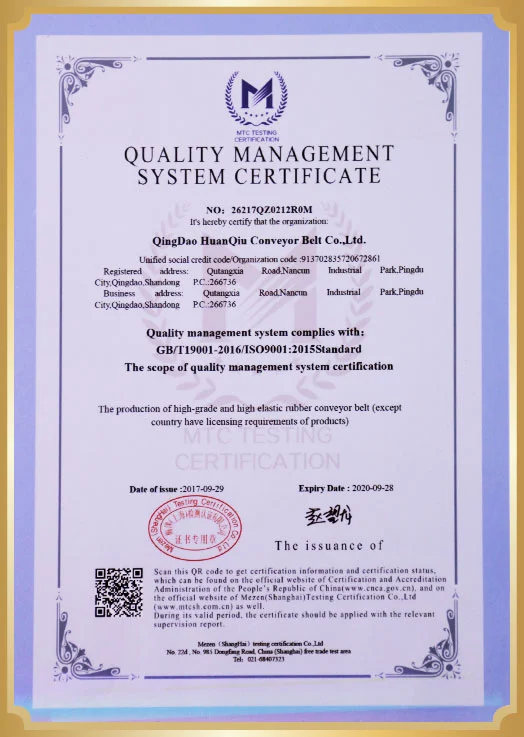
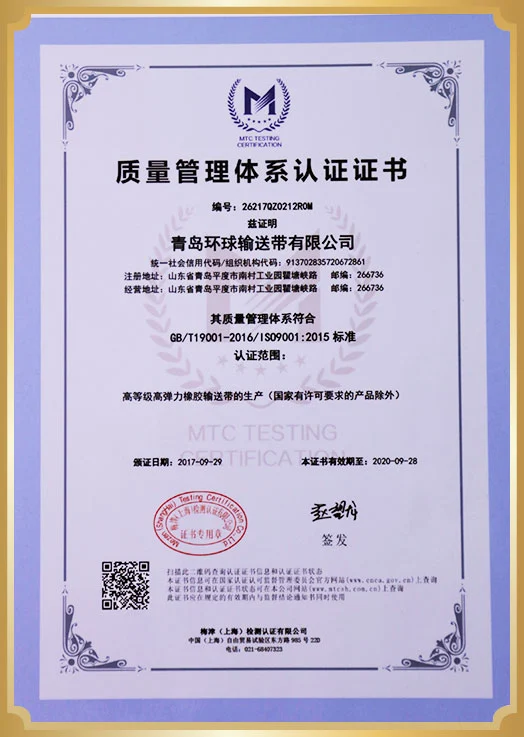
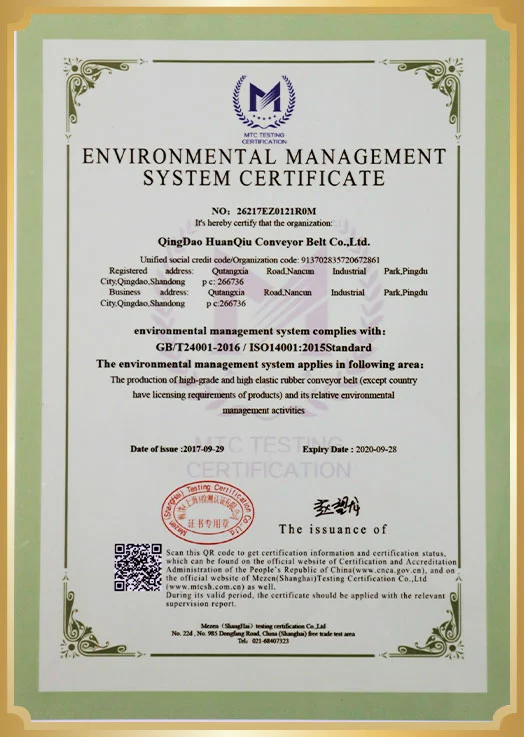
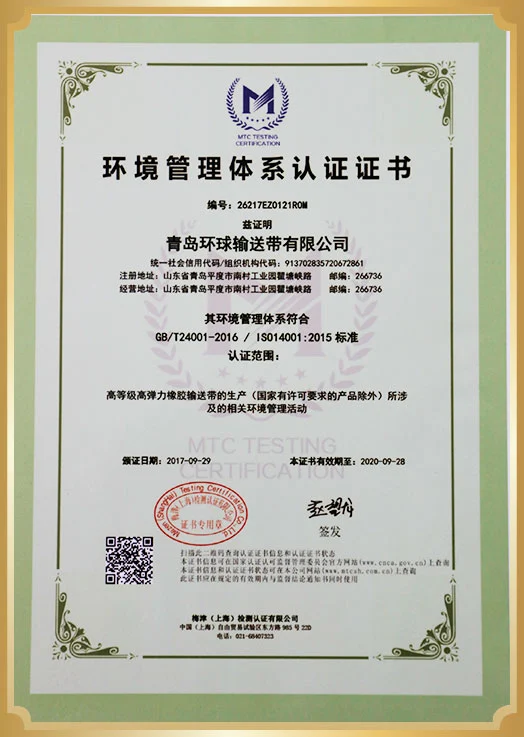
Global Belting adheres to the strictest international quality standards to ensure safety and durability in extreme environments. Our quality assurance framework includes:
Selecting the correct belt is critical for minimizing downtime and maximizing throughput. Follow this quick industry-specific selection guide:
→ Steel Cord or Ripstop for heavy impact and tear resistance.
→ Heat-Resistant EP (150°C–200°C) with EPDM covers.
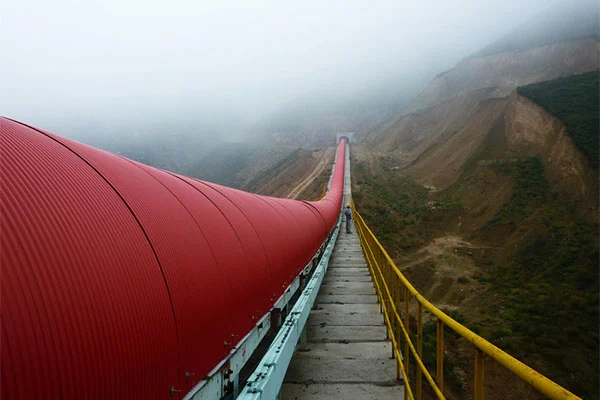
→ Chevron (anti-skid) or Pipe (dust-proof) belts.
→ Acid/Alkali-Resistant or Oil-Resistant (NBR) covers.
📞 For a custom quote tailored to your material density, lump size, and conveying angle, reach out to our technical sales team →